
Rupee is down 11% in a year: Here's what the currency slide means for you
New Delhi, May 13, 2026
The Falling Rupee Explained in Simple Terms
The Indian rupee has weakened by nearly 11% against the US dollar over the past year. Almost half of that fall came after the recent escalation in the West Asia conflict, according to a report by CareEdge Ratings.
"The persistent weakness in the rupee is evident from its 11% depreciation over the past year, of which 4.7% occurred since the war started," said the report.
Currency Movements Since Feb End
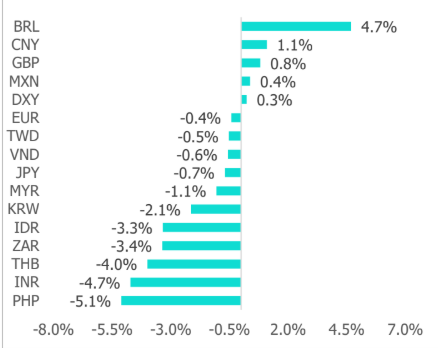
Asian currencies have taken a bigger hit compared to their global peers.
In simple terms, a weaker rupee means Indians now need more rupees to buy one dollar.
For example:
if $1 earlier cost ₹83,
and now costs ₹93,
then anything India buys in dollars suddenly becomes more expensive.
And that matters because India imports a huge amount of what it consumes — especially crude oil, gold, electronics and machinery.
Take fuel prices.India imports nearly 85% of its oil requirements. Imagine India was buying crude oil worth $100 million a day when the dollar was at ₹83. That would cost roughly ₹830 crore.But if the rupee weakens to ₹93 for every dollar, the exact same oil purchase suddenly costs ₹930 crore.
That extra cost eventually flows through the economy.Transport companies pay more for diesel. Airlines pay more for aviation fuel. Delivery companies face higher logistics costs. Eventually, prices of vegetables, groceries, cabs and flights can all rise.That is one reason economists closely watch the rupee whenever oil prices surge.
The current pressure on the rupee is largely linked to rising geopolitical tensions in West Asia, which have pushed global crude oil prices higher.At the same time, foreign investors have also been pulling money out of India.
The report said foreign portfolio investor outflows touched $13.6 billion in March 2026 — the highest monthly outflow in six years.
"India’s FPI outflows intensified following the West Asia conflict, reaching $13.6 billion in March, the highest monthly outflow in the last six years. With this, FPI outflows for FY26 were recorded at $16.6 billion, as against inflows of $2.7 billion in FY25. Looking ahead, persistent global uncertainties, elevated crude oil prices, and rupee weakness are likely to keep investor sentiment cautious, weighing on the FPI flows. Furthermore, net FDI inflows (Gross inflows – Repatriation – FDI by India) have consistently been negative over the past six months. Higher repatriations and FDI outflows have been weighing on India’s net FDI inflows. During 11M FY26, India’s net FDI inflows were modest at $6.3 billion following a poor $ 1 billion in FY25.
That increases demand for dollars and weakens the rupee further.
India is also not receiving enough fresh foreign investment to offset these outflows.
According to the report, net foreign direct investment inflows were only $6.3 billion in FY26, much lower than the long-term average of $31 billion
When global uncertainty rises, investors rush toward “safe” assets like US dollars and American government bonds. To move money out of India, they first sell rupees and buy dollars.
The report even points out that India may be missing out on part of the global AI investment boom.
While countries like the US and China attracted massive private AI investments, India received only around $4.1 billion in 2025.
"Globally, Private investment in AI surged to $345 billion in 2025..A significant portion of these investments has been concentrated in the US ($285 billion) and China ($12.4 billion), whereas India attracted only about $4.1 billion in 2025. India’s private AI investment has largely been skewed toward data centres, while it lags in frontier model development and semiconductor innovation. At a time when global funding for AI is accelerating, the absence of “pure-play” AI stocks—particularly listed firms focused on model development and chip manufacturing—has limited foreign investors’ interest. Additionally, concerns that traditional IT services companies, which form a substantial part of India’s equity market, could face disruption from AI are further weighing on market sentiment and foreign investment flows," added the report.
Private investments into AI ( BY countries)
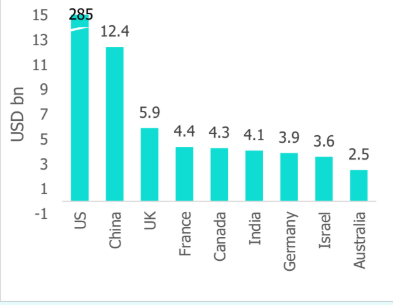
The dollar has strengthened by 0.3% since the West Asia crisis.
So how does all this affect ordinary people?
One of the clearest examples is foreign travel.
Suppose a family planning a Europe vacation had budgeted €5,000 for hotels, shopping and food.
If the rupee weakens sharply, that same trip can suddenly cost:
₹50,000 to ₹1 lakh more,
without the family changing anything about the trip itself.
Students studying abroad feel this even more sharply.
A US university fee of:
$40,000
would cost:
₹33 lakh at ₹83 per dollar,
but nearly:
₹37 lakh at ₹93 per dollar.
That difference becomes enormous when tuition, accommodation and living expenses are added together.
Electronics also become costlier.
Even products assembled in India often rely on imported components priced in dollars. So a weaker rupee can gradually push up prices of:
smartphones,
laptops,
gaming consoles,
cameras,
and luxury appliances.
Gold is another big area.
India imports most of its gold, which means a weak rupee usually pushes gold prices even higher domestically.
For example, even if global gold prices stay stable, Indian jewellery buyers may still end up paying more simply because the rupee weakened against the dollar. This is one reason governments often discourage excessive gold imports during periods of currency stress.
On Tuesday, India raised import tariffs on gold and silver to 15 per cent from 6 per cent, as part of efforts to curb overseas purchases of the metals and ease pressure on the country's foreign exchange reserves.
Prime Minister Narendra Modi on Sunday urged people to avoid gold purchases for a year to help protect foreign exchange reserves. India meets almost all of its gold consumption through imports.
The good news is that India is not facing a full-blown crisis right now.
The CareEdge report said India’s economic position today is much stronger than during previous currency stress periods like the 1997 Asian crisis or the 2013 “Fragile Five” episode.
India still has large foreign exchange reserves of around $690 billion.Think of these reserves as the country’s emergency savings account.
The Reserve Bank of India has already been using these reserves to slow the rupee’s fall by selling dollars into the market.According to the report, reserves have already fallen by around $33 billion since the conflict escalated because RBI has been intervening actively.
"Overall, the substantial FX buffer should provide the necessary cushion for the Indian economy to withstand shocks arising from the West Asia crisis. However, despite the comfortable reserve position, the RBI is likely to act prudently to preserve adequate reserve buffers rather than intervening aggressively in the forex market," the report added.
CareEdge expects the rupee to average around ₹92–93 per dollar if crude oil averages $90 per barrel in FY27. If oil prices rise further, the rupee could weaken more.
"Even if the conflict de-escalates in the near term, we expect crude oil to average around USD 90 per barrel in FY27. Under this baseline scenario, the rupee is likely to average in the 92–93 range. The fall in valuations amidst the recent correction in the equity market, along with easing trade uncertainties, should support FII inflows into the equity market. Rupee has already weakened sharply, and hence, from these levels, we feel the scope of further sharp weakening is less if a resolution is reached soon. In case of an early resolution of the crisis, we could see some support for the Indian rupee," said the report.
[The Business Standard]